Choosing the best electric scooter depends not only on looks and speed but also on the type of battery. The battery will determine your scooter's weight, range, and price. Currently, most customers consider lead-acid vs. lithium battery electric scooters before making a purchase.
In this comprehensive guide, we will explain the differences in simple terms and help you choose the best electric scooter for your needs.
1. Battery Weight & Design

Lead-acid batteries are quite heavy and bulky. This increases the weight of the electric scooter bike. The increased weight can slightly affect balance, handling, and comfort, especially when riding in city traffic.
Lithium batteries are significantly lighter and more compact. Electric scooter models with lithium batteries are smoother and more agile to handle. If you want a trendy and modern riding experience, EV scooter models with lithium batteries are the best option.
2. Charging Time & Daily Convenience
Charging time is a crucial factor for regular users.
Electric scooters with lead-acid batteries take 6-8 hours to fully charge. This is not a problem for overnight charging, but it can be inconvenient for regular users.
Electric scooter bikes with lithium batteries can charge much faster, taking 3-4 hours. This is a major advantage for office commuters and delivery personnel.
3. Battery Life & Durability
In terms of longevity, lithium batteries are definitely superior to lead-acid batteries.
A lithium-battery electric scooter offers 2-3 times more charge cycles, meaning the battery won't need to be replaced as often.
Of course, lead-acid batteries have also seen improvements. Advanced Graphene VRLA lead-acid batteries, such as those used in some AMO electric scooter models, offer improved durability, consistent power delivery, and a maintenance-free design, making them suitable for regular use.
4. Performance & Riding Range
In terms of longevity, lithium batteries are definitely superior to lead-acid batteries.
An electric scooter with a lithium battery offers 2-3 times more charge cycles, meaning the battery won't need to be replaced as often. Of course, lead-acid batteries have also seen advancements. Advanced Graphene VRLA lead-acid batteries, such as those used in some AMO electric scooter models, offer improved durability, consistent power delivery, and a maintenance-free design, making them suitable for regular use.
5. Cost & Long-Term Value
Price is a common deciding factor.
Lead-acid batteries are cheaper to purchase, making them ideal for those seeking an affordable electric scooter. Lead-acid batteries are also easier to replace.
Lithium batteries are more expensive to purchase, but they are more cost-effective in the long run. If you have the budget, lithium batteries might be a better option.
Why AMO Electric Scooter Is a Trusted Choice
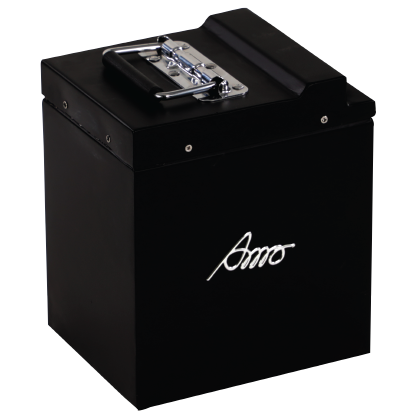 AMO Electric Scooters offers a range of electric scooters that are well-suited for Indian roads. Most AMO electric scooters come with the latest Graphene VRLA lead-acid batteries (12V 32Ah) that:
A). Support 48V / 60V / 72V
B). Maintenance-free and spill-proof
C). Commuting, delivery, and long-range reliable
D). Easy to replace with standard battery fitment
This makes AMO a great option for those looking for the best scooter with a balance of performance, durability, and price.
Final Verdict: Which Electric Scooter Battery Is Right for You?
A). If you are looking for a proven, reliable, and affordable solution, choose an electric scooter with a lead-acid battery.
B). If you are looking for a lightweight solution with faster charging and long-term cost savings, choose an electric scooter with a lithium battery.
Both solutions have their advantages. The trick is to choose the battery type that best suits your daily mobility needs, budget, and expectations.
If you are looking for a reliable electric scooter with proven technology and a reasonable price, you should definitely consider AMO electric scooter models.
© AMO Mobility Solutions Pvt. Ltd, All Rights Reserved | Powered by Amo Electric Bikes